


The Evolution of Women’s Roles in Architecture
Over the past thirty years, the role of women in architecture and its allied disciplines has shifted in ways both visible and structural. The evolution is not simply about numbers. It is about authority. It is about risk. It is about how firms are built, how decisions are made, how leadership is defined, and how culture adapts.
For some, the early years were defined by isolation and proof. For others, by entrepreneurship without safety nets. Today, the landscape looks different: women in executive roles, visible mentorship, and growing representation across design and technical streams.
Yet change has not been linear, nor is it complete.
Through four intergenerational conversations—with a founder, a director, a senior interior designer, and principal, mechanical lead—a portrait emerges of how women’s roles in architecture have evolved, and where the profession is still headed.
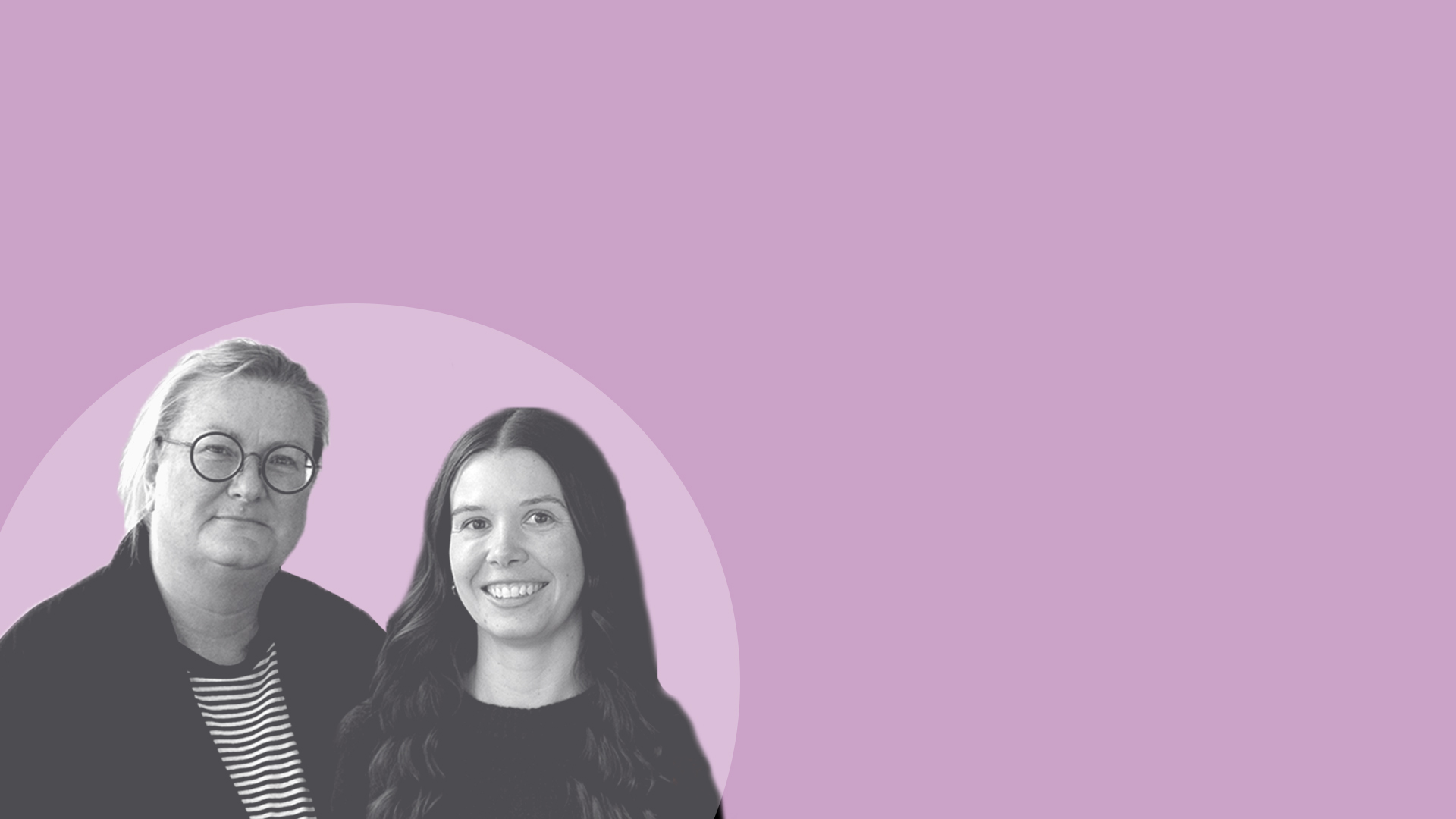
Liz Gabaldo (Senior Associate, Interior Design Lead) and Amanda Corbett (Intermediate Designer) talk work, parenthood and structural change.
Amanda Corbett: What drew you to interior design?
Liz Gabaldo: I didn’t know it at the time, but when I was young, my father, who’s a master carpenter, built a big dollhouse for my sisters and me. I have two sisters that are younger than I, and it was for our Barbies. Instead of playing with Barbies, I decorated the house. I wallpapered it. I made a kitchen. I made furniture. When I look back, that was probably the earliest sign of what I was going to do, because I had zero interest in playing with dolls.
Life just led me toward interiors. I was in Nova Scotia when I decided I wanted to study interiors, but they didn’t offer anything in that province. So, I went to Europe for a year and then came back to Ontario and studied. I think it was always a calling for me.
Amanda Corbett: I didn’t realize you went to Europe for a year. Where did you go?
Liz Gabaldo: I went to Germany. I lived with my grandmother, worked, and learned German properly, which was a good experience before coming back to school. I was a mature student at 20 when I entered interior design. I don’t think I’ve ever looked back. There was never any other profession that interested me.
Amanda Corbett: Oh, that’s so fun. I feel like that’s a great way to get the experience of the European best on it and then bringing it back home.
Liz Gabaldo: Travel influences anything creative. Whether you’re in fashion, interiors, or architecture, travel can only help.
Amanda Corbett: Do you feel the industry is very different from when you first entered it to how it is now?
Liz Gabaldo: I entered the profession a long time ago. I graduated in 1983, and they didn’t even have CAD in schools at that point. We learned perspective drawing by hand. We did hand-painted renderings. Everything was done manually.
The introduction of AutoCAD changed everything. Now with Revit and all the other tools, technology has completely transformed the industry. And I haven’t kept up with all of that. Thank goodness I work with a lot of younger talent!
But the hand drafting, sketching, and perspective work helped you visualize things differently. All of it served a purpose.
We also studied art history and architectural printing, which I don’t think they teach anymore. I bring a different perspective to the younger team here, and I hope that adds value.
Amanda Corbett: Knowing you’ve worked in so many different sectors, have you seen women’s roles evolve?
Liz Gabaldo: I’ve been privileged, since the beginning of my career, to work with very strong and talented women who were at the peak of their careers in architectural and design firms.
The opportunity for women has always been there, but I think it’s expanded and is advancing faster now. The struggle to prove yourself as a woman in the profession is easier than it used to be.
The profile of women in business, especially architecture, has certainly come to the forefront. I’ve worked with women who owned their own firms, who were partners with males in firms, who led design departments. I’ve been very lucky.
In terms of the opportunities, I think that the most advancement I see is How women now are able to balance their personal life and their professional life a lot more. We didn’t have the opportunities that you have now in terms of maternity leave. I mean, I literally went back to work two weeks after. I gave birth to my daughter and so, so I think the the acceptance of balancing life along with your profession is probably the greatest opportunity that I think young profession.
The biggest advancement I see is how women now are able to balance their personal life and their professional life a lot more. We didn’t have the opportunities that you have now in terms of maternity leave. I mean, I literally went back to work two weeks after I gave birth to my daughter and so, I think the acceptance of balancing life with your profession is probably the greatest advancement for young professionals today.
Amanda Corbett: I feel like people are still hesitant about having kids because of career impacts, but it’s encouraging to hear your perspective.
Liz Gabaldo: It changed everything for us. It allows for a much better life balance.
Amanda Corbett: Comparing to you were working with the bank, do you notice differences in leadership at the decision-making table?
Liz Gabaldo: We are in an industry where engineers and architects are still predominantly men, and many of those leadership roles are still held by men.
But the opportunities are now there for women to advance. We’re lucky in our own office to have a lot of strong women who do hold significant executive roles. So I see that the future is bright for all of you to have opportunities within this firm. That’s largely thanks for Joanne [McCallum], right? And then we have all the other women that have joined her at the executive level so, I think that we’re very privileged to be here.
Amanda Corbett: What challenges have helped shape the designer you are today?
Liz Gabaldo: When I graduated, I was lucky enough to have great opportunities that were shaped by talent and relationships within the industry. These were women I worked within architectural firms, also with the bank, but they headed the design departments, and they were my role models.
The biggest challenge was work-life balance. I ran my own business for many years. The work and opportunities were there, but finding balance while being a mother, wife, and business owner was difficult.
I feel like I finally have that balance now, but it takes time.
Coming here later in life, after running my own business, gave me a new perspective. Having your own business brings pressure. You don’t have benefits. You don’t have support systems.
My husband traveled a lot while the children were growing up, so I had to manage everything.
That might be my only regret. Perhaps joining a firm like this earlier would have provided more support.
But that being said, having my own business for all those years is something that I bring to the table here. Everything that you do in your life brings you to the point where you are.
Amanda Corbett: I can see that. I feel like even from when I first started here and you and I were working together every single day, I felt I noticed how you interacted with clients. And you have a go getter attitude, and I felt like it made me more comfortable to also embrace that.
Liz Gabaldo: In this industry, especially residential design, you need to be that voice. It gives others confidence in your decisions and leadership.
I’ve seen you grow in your confidence and communication. Being generous and approachable is just as important as being technically skilled. You have to be a good person and be approachable and willing and project that on to everyone else. Whatever I’m passing on to you, I hope you’re able to pass on to the next generation that steps up as well.
Amanda Corbett: Absolutely, I love that. What gives you confidence about the future of the profession?
Liz Gabaldo: Well, I’m just glad that I’m towards the end of my profession! [laughs]
Because technology and AI are certainly changing everything, even for you as a younger generation. I don’t think you should ever feel that it’s going to affect your career in a negative way. I think that if you can use it properly, it can enhance your career. But also use it, strategically, because I’m not a fan of what it’s doing to our planet.
I think that what you bring in your talent and your personal touch can’t be changed by technology. My dad used to say to me, “if you’re good at your job, you’ll always have one.” Work towards your own goals and be your own best person as well as a great worker that people can rely on. I think that’s what’s going to lead the future. I wouldn’t worry about all of the technology that’s going to come into play. You will know how to handle it. You bring something else to the table.
Amanda Corbett: Yeah, I think that’s true. That leads back to the previous point where we talked about generations and what each brings to the table. It’s just a continuation of bringing your knowledge, but also supporting in any way you can. It’s an endless cycle, as long as you’re doing it with people that are respectable and with your best intentions in mind.
Liz Gabaldo: And believe me, working with all of the younger staff that I have the privilege of working with, I learn just as much from you as you learn from me. You make me want to keep growing and trying new things and not be afraid to think out-of-the-box. I hope I do that for you too. To teach you how important design is and not to be stuck in a particular place. Just always keep growing in your profession and in your personal life.
Amanda Corbett: I feel like when you’re in design school, a lot of people are like, “oh, it’s like just like HGTV!”, but it’s not. Only the nice things are shown. It’s much grittier and you have to be passionate about the industry, and I feel like you’ve shown that not only from all your experience but making it through having your business and the relationships you kept with those clients. I feel like that in itself is very inspirational. So that’s nice to hear.


