


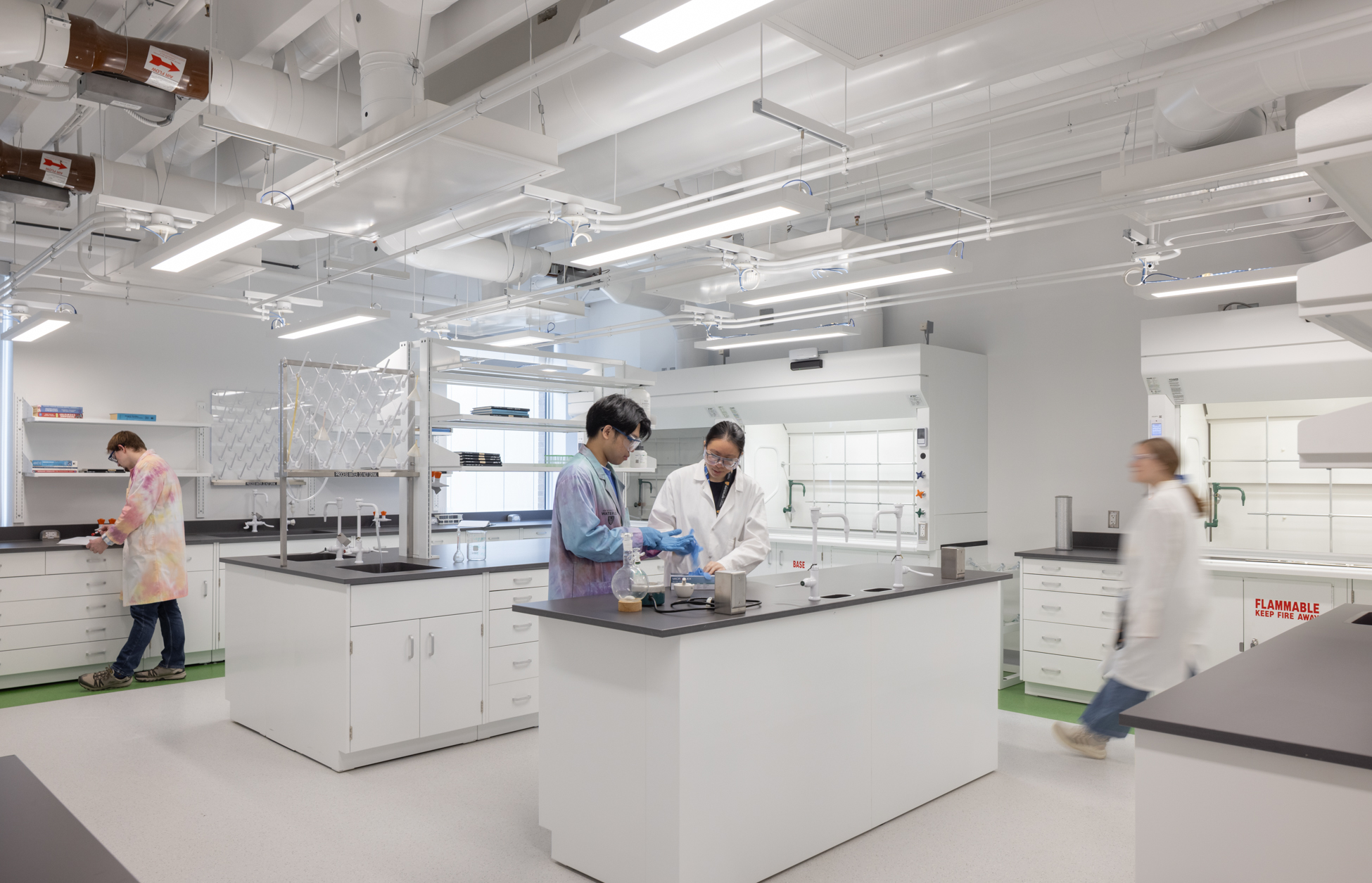
The University of Waterloo came to us with a challenge: an outdated lab floor that no longer supported how their researchers actually work. Years of incremental updates had left the space fragmented, hard to navigate, and limiting collaboration.
We reworked it, together.
As an integrated team, the focus was simple: make the space easier to use. The layout was reorganized around a single, daylit corridor, replacing a dark, double-loaded plan with a clear spine that improves wayfinding, safety, and visibility. Labs, grad spaces, and faculty offices now connect along this edge, with shared areas that support everyday interaction.
Inside the labs, flexibility was built in from the start. Modular casework allows spaces to shift over time. Mechanical systems were upgraded to improve air quality, stability, and comfort, while reducing the background noise and variability that can impact research. Daylight and sightlines reach deeper into the floor, making the space feel more open and connected.
It comes down to a simple idea: start with how people use the space, then align the design and systems to support it.
That approach was recently recognized with a Green Building Award from SABMag . Stay tuned for a project feature in their Summer issue that takes a closer look at the renovation.
Read the full list of winners


