


The Evolution of Women’s Roles in Architecture
Over the past thirty years, the role of women in architecture and its allied disciplines has shifted in ways both visible and structural. The evolution is not simply about numbers. It is about authority. It is about risk. It is about how firms are built, how decisions are made, how leadership is defined, and how culture adapts.
For some, the early years were defined by isolation and proof. For others, by entrepreneurship without safety nets. Today, the landscape looks different: women in executive roles, visible mentorship, and growing representation across design and technical streams.
Yet change has not been linear, nor is it complete.
Through four intergenerational conversations—with a founder, a director, a senior interior designer, and principal, mechanical lead—a portrait emerges of how women’s roles in architecture have evolved, and where the profession is still headed.
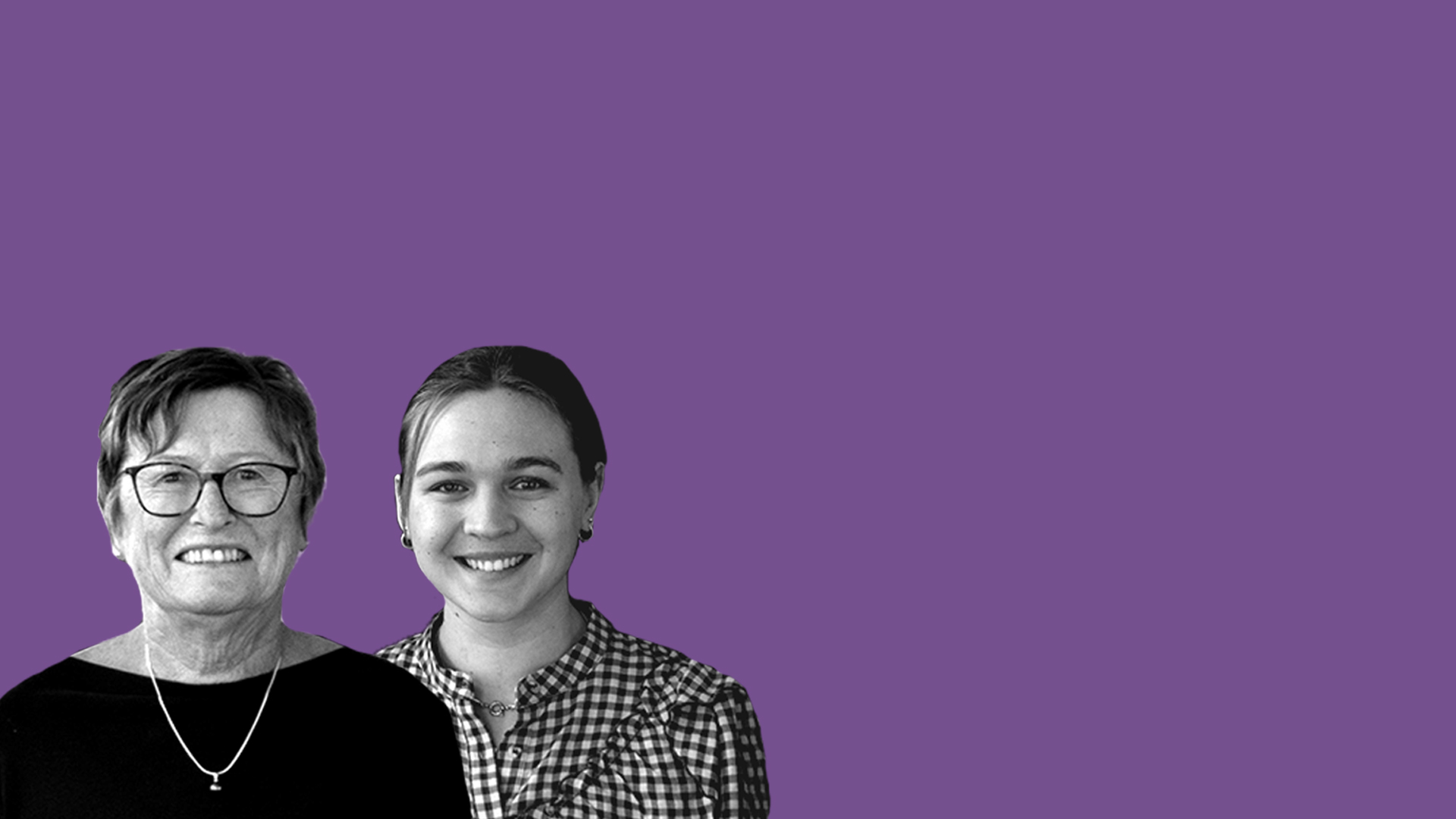
Joanne McCallum (Director, Principal Emeritus, Past Board Chair) and Arine de Villiers (Junior Designer) talk risk, mission and founding a firm.
Arine de Villiers: Joanne, thank you for joining me for this interview for International Women’s Day. One of the things I’ve always admired about you is your advocacy for sustainability. How has your understanding of sustainability evolved over the years?
Joanne McCallum: It’s undergone a significant evolution. I think about sustainability in a much more holistic way than when I started this journey a few decades ago, where the focus was on materials, energy efficiency, and building systems.
Over time, that expanded to include the relationships between buildings, site, community, and, in the broadest sense, our connection to nature and the environment. It’s become a much fuller, more integrated approach.
My academic environment included planners, environmentalists, and architects, which prepared me to embrace integrated design from the inception of the firm. Sustainable design requires committed teamwork—professionals, clients, trades, and authorities—who are willing to step slightly outside their traditional comfort zones. I like to say it’s just three degrees off center, but enough to collectively make better decisions.
What surprised me was how difficult it was to adjust the process. What seemed logical to me was perceived as risk by others. Over the past 30 plus years, I’ve learned to articulate perceived risk very consciously. I don’t always think doing something better is risky, but others do.
I’ve learned how to define those risks, develop back-up plans, and build collective agreement so that we can achieve better outcomes. It’s about communicating clearly—having a Plan A, a Plan B, and a Plan C—so that progress becomes possible.
When I started, the word risk wasn’t even part of our lexicon. You just did your work.
Also, the thing that has always amazed me is that our professions—and I include engineers in there with architects—we get rewarded for doing status quo. We do not necessarily get rewarded for trying to push the boundaries to do something better. If you’re trying to achieve a goal and maybe you just missed that target by a little bit, but it’s still 80 percent better than status quo, if you don’t exactly hit that target, it’s perceived as a failure. That makes no sense to me at all.
Arine de Villiers: And in terms of your daily life, how do you practice sustainability in that way, through little habit changes? What would that look like for you?
Joanne McCallum: I’ve been fortunate to modify the environments I’ve lived in. I’ve been able to develop highly sustainable building systems and create residential environments that rely on passive technologies, which are incredibly simple if you have the opportunity to implement them.
Then I just do things that I think most people do, which is reuse, recycle. Nothing ever goes to waste around here. Those are daily habits that one gets into, and it just becomes ingrained.
Arine de Villiers: My second question is a bit more personal. I’ve always been curious about how women in our profession raise families because it’s obviously a very demanding and time-consuming career. How did becoming a parent reshape the way you approached work, ambition, boundaries, and balancing family responsibilities?
Joanne McCallum: I would be amiss if I said I had boundaries. You don’t try to change the world within a nine-to-five structure.
Not that I’ve changed the world, but I was on a mission. The most important thing was being clear with my partner about the level of commitment required to build a firm and pursue the goals that mattered to me.
Balance is not a term I would use for my day-to-day life.
What we did do successfully was protect meaningful family time. Vacations became incredibly important. We camped, skied, sailed, traveled—always together, often with extended family. Those moments, even if they happened only a few times a year, were deeply meaningful.
I didn’t want to be a hockey mom. I wanted to be a ski mom so that we could ski together.
Arine de Villiers: Now that you’ve entered retirement and created such a legacy, what do you hope colleagues and mentees remember most about working with you?
Joanne McCallum: I hope they remember that we encouraged people to think differently.
Not everything works the way you hope. I have an expression: you fail your way to success. We don’t penalize failure. We learn from it. We reward success, but we also encourage people to push themselves and ask, are there other ways to do this?
If we didn’t achieve everything we wanted, we would step back and ask, what are the lessons learned? How can we improve?
I hope that culture—of risk-taking, accountability, and continuous learning—is part of the legacy.
Arine de Villiers: If you could sit down with your younger self, what advice would you give, and what advice would you pass on to young women starting out in architecture today?
Joanne McCallum: Follow your passion.
My passion was water, and somehow that led me to architecture. Everything I think about connects back to water—rainwater, snow, buildings, collection, and how we approach these systems more intelligently.
Ask questions. Never stop asking questions.
As an architect, when something isn’t working, you’re standing in front of the client. You need to understand enough about every building system to engage confidently and ask the right questions.
Go to building sites. Push for that opportunity. It’s critical to see how things actually come together.
I was very introverted, so I had to push myself to say, take me to the site. I need to see this.
I’ve seen many young professionals hesitate to ask questions because they want to appear knowledgeable. I always encourage people to ask anyway. Even now, I ask more questions than I ever did. I’m not embarrassed by what I don’t know.
Today, people are generally willing to explain. That wasn’t always the case.
Arine de Villiers: Were you scared to start your own firm, especially when sustainability wasn’t widely embraced?
Joanne McCallum: I don’t think I was scared. I was naive.
Sustainability wasn’t part of the conversation. As a young intern, when I asked about it, people would say, what are you talking about?
I felt compelled to start the firm because no one was listening.
There were no clients waiting. No one was asking for sustainable design. It was like pushing a rope uphill.
We’re still pushing that rope uphill, but there’s more understanding now. The firm today is incredibly well positioned to advance sustainability, and we’ve learned from every project.
Arine de Villiers: Do you miss being in practice?
Joanne McCallum: I miss the people. I miss the engagement.
I am extremely proud of where the firm is now. It is driving forward with intelligence and integrity and crafting new boundaries. The firm is just starting to hit its stride.
I’m proud that we’ve been able to set that up for success.
I’m still engaged. I’m renovating a 150-year-old house, the Kincardine office, which is a very humbling experience. I’m still involved with teams in the firm. I’m still on the board. I’m not disconnected. I’m involved in a meaningful way.
Arine de Villiers: Speaking of the Kincardine office you’re working on right now. Is there anything in particular, from a heritage and sustainability perspective, that you’ve noticed or found fascinating?
Joanne McCallum: This is a house I’ve discovered that wasn’t built by a craftsman, but it was built very solidly. There’s a lot of plaster, but no lath—just solid one-by-fours and one-by-sixes. Cutting into the wall is, like, you need a chainsaw.
I’m looking at these old square-headed nails that were hand fabricated 150 years ago. They’re three inches long. Trying to pull one out is unbelievably challenging.
It’s a real learning curve—understanding what was done 150 years ago and how to convert that into a highly sustainable house.
I’m trying to document it as I go so that it can be available for others to see. How geothermal wells are drilled. How to take apart a door frame that’s massively solid. It’s an ongoing process of discovery.
Arine de Villiers: You’re living on site every day.
Joanne McCallum: Yes. It’s interesting.
Arine de Villiers: Thank you so much for this interview. It was so lovely to chat with you. I hope we can see each other in person soon—and go skiing.
Joanne McCallum: On the ski slopes.


